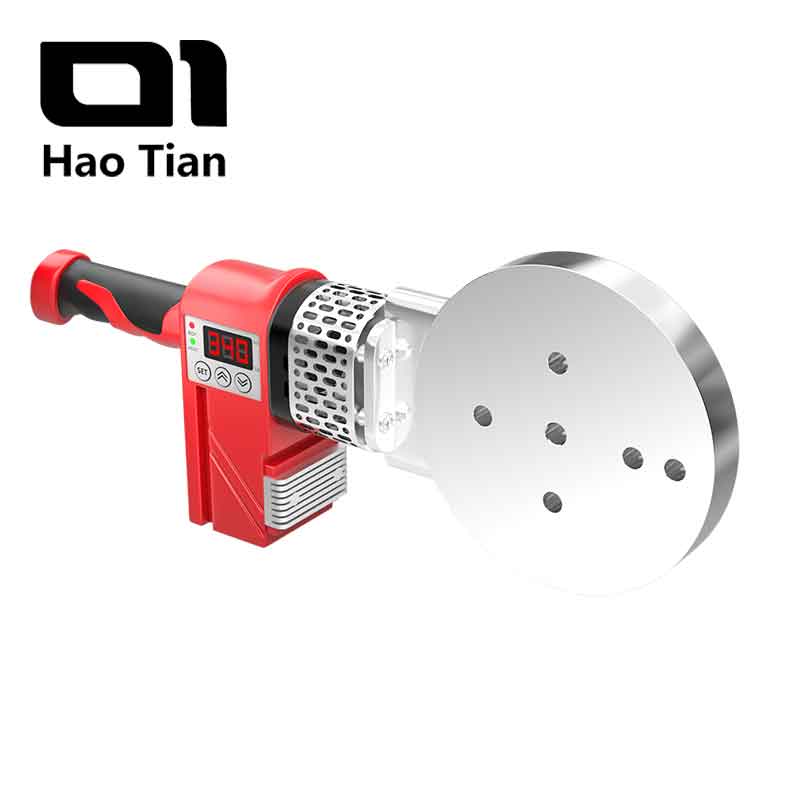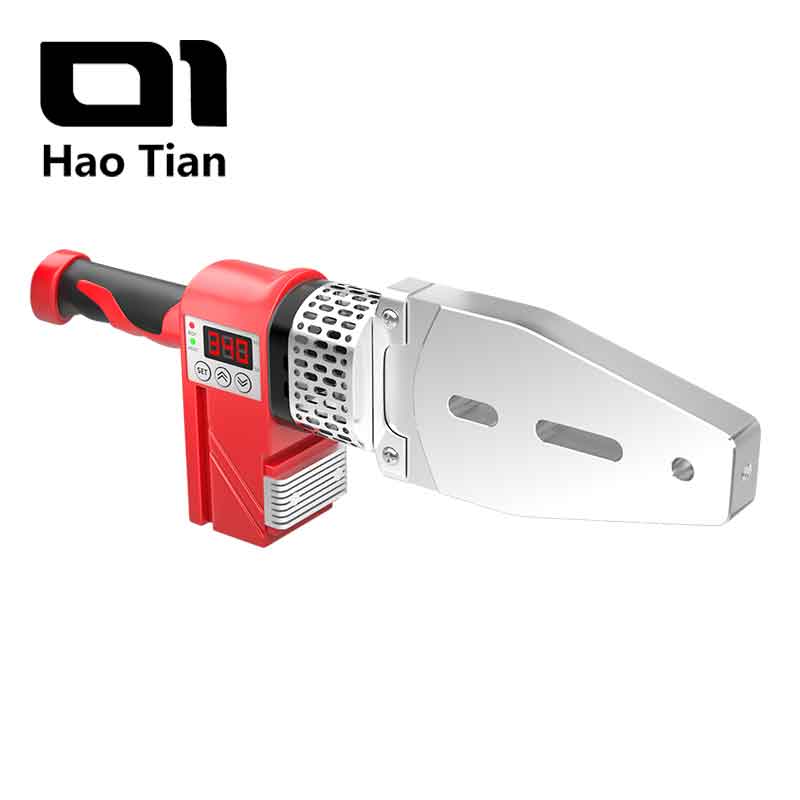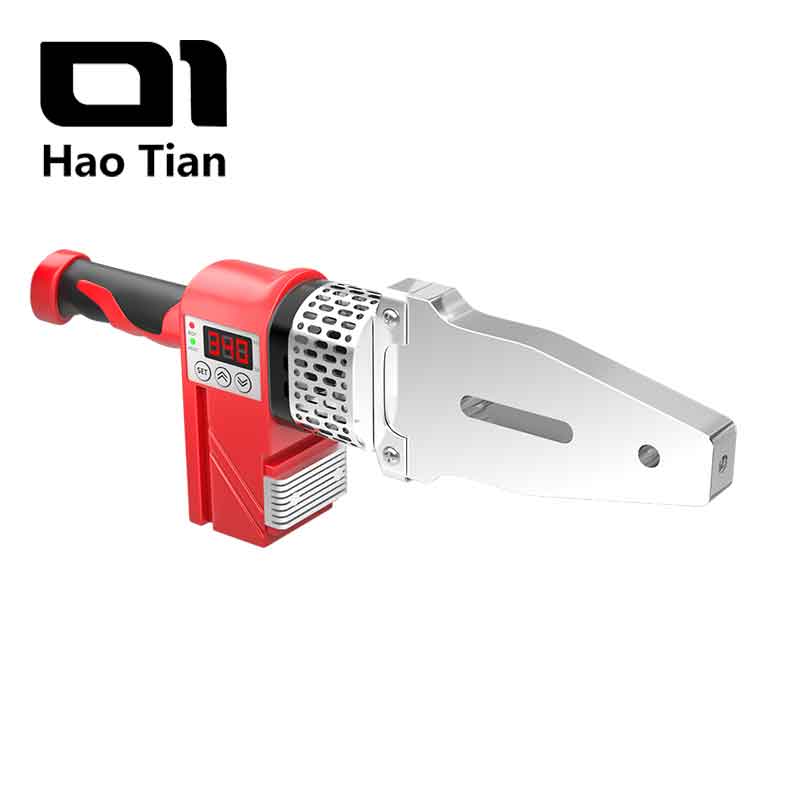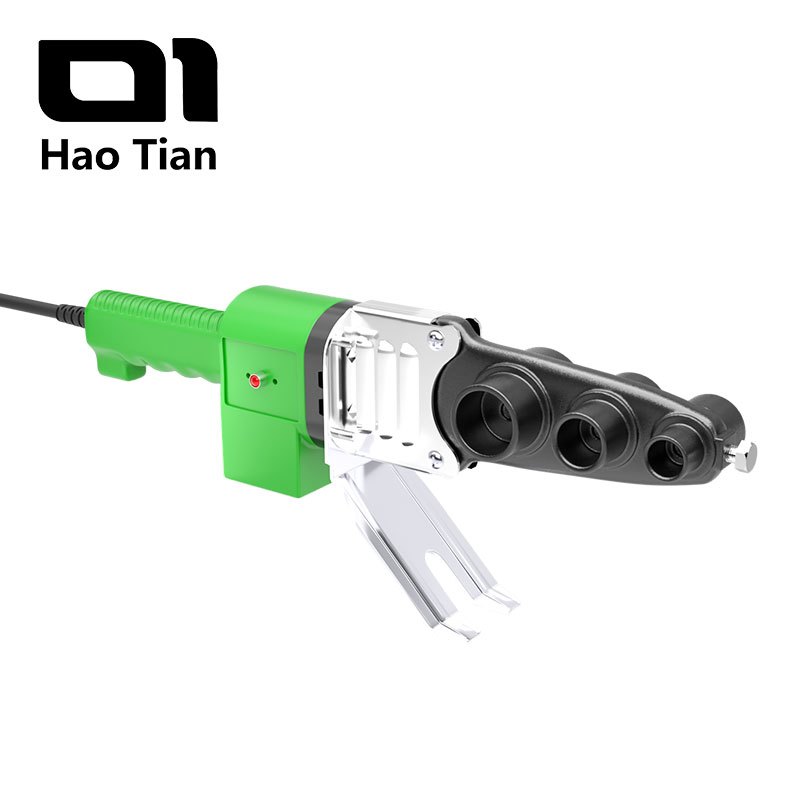
Introduction to PPR Socket Welding Mold
A socket welding mold is a core component of a PPR welding machine, directly responsible for heating, shaping, and joining PPR pipes and fittings through the socket fusion process.
Unlike the welding machine body, the mold is the part that comes into direct contact with the pipe. Its dimensional accuracy, thickness, surface coating, and thermal stability determine the final welding quality.
For professional applications, PPR socket welding molds typically cover a size range from 20mm to 110mm, meeting both residential and industrial pipeline requirements.
Key Technical Factors of Socket Welding Mold Performance
Mold Thickness and Thermal Stability
Mold thickness plays a critical role in heat retention and temperature consistency during welding.
- Thin molds heat up quickly but lose temperature easily, leading to unstable fusion.
- Properly thickened molds, especially for large diameters such as 75mm, 90mm, and 110mm, ensure uniform heat distribution and controlled welding time.
For large-size socket welding molds (75–110mm), insufficient thickness often results in:
- Weak fusion strength
- Uneven melting
- Deformed pipe ends
Surface Coating and Anti-Stick Performance
High-quality socket welding molds are usually treated with PTFE (non-stick) coating.
Comparison:
- Uncoated aluminum molds:
- Pipe material sticks easily
- Difficult pipe removal
- Higher risk of surface damage
- PTFE-coated socket welding molds:
- Excellent anti-stick performance
- Smooth pipe insertion and removal
- Longer service life under high-temperature cycles
A stable coating also ensures consistent results when welding different PPR pipe brands.
How to Identify a High-Quality Socket Welding Mold
From a manufacturing perspective, a reliable socket welding mold should meet the following standards:
- Precise inner diameter tolerance
- Uniform mold wall thickness
- Durable and heat-resistant coating
- Minimal deformation after repeated heating cycles
- Smooth pipe insertion without excessive force
A good mold ensures strong joints, full pipe bore, and long-term pipeline reliability.
Recommended Socket Welding Mold Combinations (20–110mm)
20–32mm Combination
- Ideal for household plumbing and light maintenance
- Focus on precision and anti-stick performance
20–63mm Combination (Most Popular Set)
- Covers mainstream residential and commercial applications
- Balanced cost and functionality
- Widely used in export markets
75–110mm Combination
- Designed for municipal and industrial pipelines
- Requires reinforced thickness and high thermal stability
20–110mm Full Size Combination
- Suitable for professional contractors and engineering companies
- One set for all applications
- Highest customization value
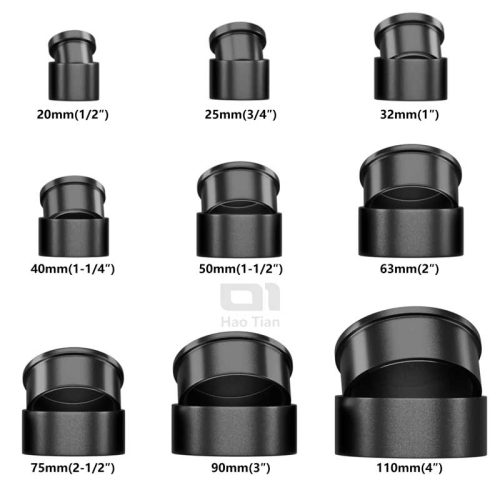
Complete PPR Socket Welding Mold Size Chart
(Metric & Inch Conversion)
- 20mm (1/2”)
- 25mm (3/4”)
- 32mm (1”)
- 40mm (1-1/4”)
- 50mm (1-1/2”)
- 63mm (2”)
- 75mm (2-1/2”)
- 90mm (3”)
- 110mm (4”)
These sizes cover the most commonly used PPR pipe diameters worldwide and ensure compatibility with standard PPR welding machines.
Custom Socket Welding Mold Options (20–110mm)
Professional manufacturers offer custom socket welding molds to meet specific project requirements, including:
- Special diameter tolerance adjustment
- Customized PTFE coating thickness
- Laser-engraved logos or branding
- Tailored mold set combinations
- Compatibility optimization for specific PPR pipe materials
Customization ensures higher welding consistency and better long-term performance.
Why Socket Welding Mold Quality Matters
The socket welding mold is not an accessory—it is the decisive factor in PPR pipe fusion quality.
High-quality molds directly impact:
- Welding strength
- Internal pipe diameter integrity
- Long-term leak resistance
- Construction efficiency and failure rate
In PPR pipeline systems, mold quality defines welding results. A professional PPR welding machine must always be paired with a precision-engineered socket welding mold.